


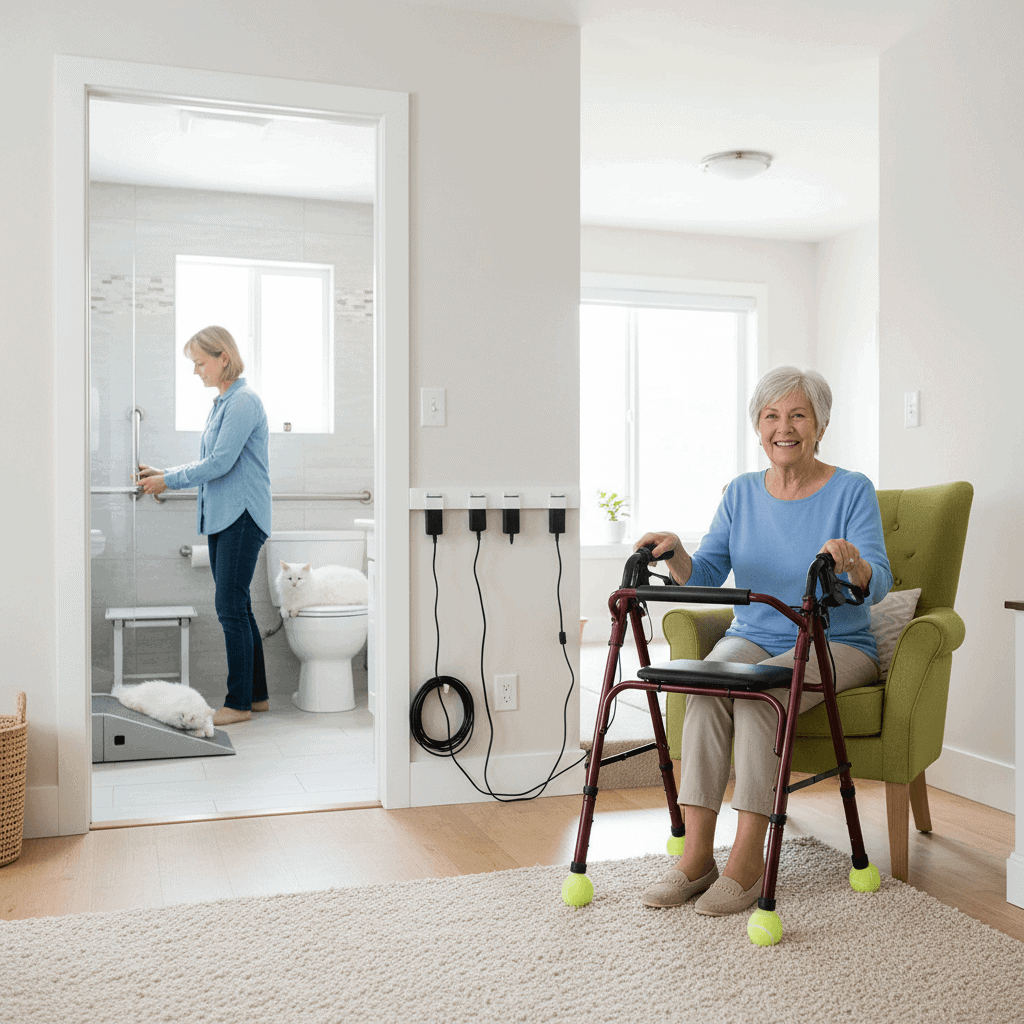
Seniors who live at home can keep their independence while staying safe when families and caregivers take practical steps. Small changes to layout and routine reduce common hazards and help someone age in place with fewer worries. This article lays out clear actions you can take in each room and across daily life to make a living space more secure and livable.
Safety is a mix of physical adjustments and social supports. The advice below covers fall prevention, bathroom upgrades, kitchen precautions, medication handling, helpful technology, and ways to keep emotional health strong. Each section includes specific tips and examples you can apply in a weekend or plan over several months.
Assessing Home Risks for Seniors at Home
Start by walking through the home from the perspective of the person who will live there. Look for places where tripping can occur and note any tasks that require balance or reaching. A simple checklist helps to capture hazards and prioritize fixes.
- Lighting levels during day and night
- Floor surface conditions including rugs and thresholds
- Stair stability and handrail placement
- Bathroom slip points near tubs and showers
- Clear travel paths between bedroom kitchen and bathroom
Use a smartphone to take photos of tricky areas so you can refer back when making modifications. If mobility is limited, invite a physical therapist or home health professional to do an evaluation. Their observations often highlight risks that family members miss.
Fall Prevention Strategies for Everyday Rooms
Falls are the leading cause of injury among older adults in the home. Reducing fall risk starts with removing hazards and continues with training and strengthening. Practical actions cut risk significantly.
- Replace loose area rugs with non slip mats or remove them
- Keep walkways clear of clutter and cords
- Install handrails on every stair on both sides when possible
- Use bright, even lighting in hallways and stairways
- Arrange furniture to provide wide, obstruction free routes
Simple strength and balance practices to add
Short daily exercises improve balance and reduce fall risk. Try chair stands and heel to toe walking for a few minutes each day. Many community centers offer free classes that are gentle and social.
Useful equipment options
- Portable grab bars for walls and tubs that do not require heavy installation
- Non skid shoe soles for use indoors
- Night lights along paths to the bathroom
Bathroom Modifications That Reduce Risk
Bathrooms are high risk because of wet surfaces and tight spaces. The right choices make showers and toilets much safer.
- Install grab bars near the toilet and in the shower
- Use a shower chair and a hand held shower head
- Choose non slip flooring or add non slip strips inside the tub
- Raise toilet seat height if bending is difficult
- Keep commonly used items within easy reach to avoid stretching
Example upgrade plan for a single bathroom over a weekend
- Day one remove loose mats and add non slip strips
- Day two install two grab bars and a handheld shower head
- Day three add a shower chair and reposition toiletries
These changes lower the chance of a fall and make bathing less tiring. If plumbing or structural changes are needed hire a qualified contractor and get multiple quotes.
Kitchen Safety and Medication Management
Kitchens present fire and burn risks along with slipping risks from spills. Medication mistakes are common and can have serious effects. A combination of design changes and routine checks helps here.
- Keep stove knobs at the rear when possible and use back burners for cooking
- Place frequently used items at waist height to avoid using step stools
- Use timers and automatic shutoffs on small appliances
- Document all medications in one list with dosages and times
- Use a simple pill organizer and review prescriptions with a pharmacist twice a year
Tips for medication safety include labeling bottles with large print and keeping a medication calendar on the fridge. Ask a doctor to review all prescriptions and over the counter items for interactions and redundant treatments.
Technology That Supports Independent Living
Simple technology provides extra safety without intruding on daily life. Choose tools that match the person s comfort with gadgets and add them gradually.
- Medical alert devices worn as pendants or bracelets for quick help calls
- Smart lighting with motion sensors in hallways and bathrooms
- Automatic shutoff plugs for irons and space heaters
- Large button phones or voice activated calling for emergencies
How to introduce new devices without stress
Start with one device and show how it works. Practice using it during calm times so the person feels comfortable. Keep instructions in large print and do a monthly check to confirm batteries and connections are working.
Privacy and data considerations
When using monitoring devices agree on what is shared and with whom. Motion sensors and door alerts provide safety but should be set up with respect for personal space. Keep account usernames and passwords in a secure but accessible place for trusted family members.
Social and Emotional Safety at Home
Feeling lonely increases health risks and slows recovery from illness. Safety includes social contact and emotional well being. Regular visits and activities reduce the chance of unnoticed problems and give support for daily tasks.
Encourage a calendar of visits and calls so routines include interaction. Local senior centers faith groups and volunteer programs often offer free check in calls and transport for appointments. For more background on community programs and physical changes that keep people safer at home visit senior living safety for ideas and links to services in many areas.
- Arrange regular check in calls with neighbors or family
- Sign up for local meal delivery or community lunches
- Encourage hobbies that can be done at home and shared over the phone
Examples of simple routines that improve emotional safety include a morning call that confirms the person got up and had breakfast and a daily reading time with a volunteer on the phone. These habits reduce the chance that a problem goes unnoticed for hours or days.
Planning for Emergencies and Mobility Changes
Prepare for sudden changes by making a plan and storing critical information in an easy to find place. An emergency binder should include contact numbers medications and medical history. Practice how to leave the house quickly and where to meet if evacuation is needed.
- Keep a list of doctors pharmacy and an emergency contact on the fridge
- Have a small bag ready with copies of medication lists glasses and a phone charger
- Review the plan once a year or after any major health change
When mobility declines consider rearranging rooms so the bedroom is on the main floor and daily needs are close by. If stairs cannot be avoided add a stair lift or look at short term home modifications while longer term plans are made.
Working With Caregivers and Professionals
Good safety is a team effort. Family members professionals and paid caregivers each bring useful perspectives. Communication and clear task sharing reduce errors and overlap in care.
- Set up a shared calendar for appointments and medication changes
- Hold a monthly check in meeting to review progress and needs
- Keep a log of doctor recommendations and any changes to therapy
When hiring in home help check references and ask about training related to elderly care. A brief written plan clarifies what is expected for daily routines and emergency responses.
Use simple tools like photos and sticky notes to label storage areas and cupboards. Photos on the front of a drawer reduce time spent searching and lower the chance of reaching for high shelves.
Some communities offer home safety assessment programs that visit at low or no cost. Take advantage of those visits to get a checklist and a second opinion. Most visits point out inexpensive fixes that make an immediate difference.
Finally review financial and legal documents and make sure powers of attorney and advanced directives are up to date. These documents allow fast decisions when a crisis happens and reduce confusion for family members.
Conclusion
Creating a safe environment for seniors at home is a practical project that mixes home fixes with routine and social supports. Start by assessing risks and addressing the most dangerous items first. Focus on fall prevention in living areas and bathrooms and improve kitchen and medication safety with clear systems. Add simple technology and regular social contact to reduce isolation and provide quick help when needed. Plan for emergencies and keep legal documents current so decisions can be made quickly when circumstances change.
Take action today by making a short checklist and targeting three improvements you can complete this month. Invite one trusted professional to do a walk through and set up a family meeting to share responsibilities. Small steps create steady results and let a loved one keep living at home with greater confidence and comfort. If you begin with the list form above you will see measurable results fast and protect the health and dignity of the person you care about. Reach out to local services and use the resources suggested to build a safe home that supports independence for years to come.